
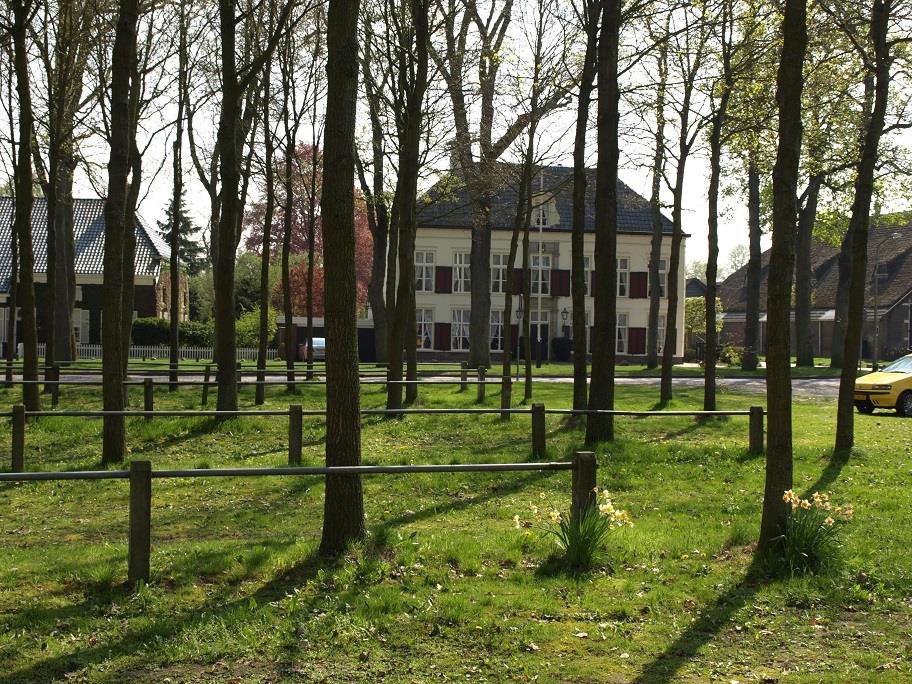
Zuidlaren has no fewer than seven brinks (village greens), which is why it is known as a green village.
In 2004 Zuidlaren was even named the greenest village in Europe!
The Pieterpad long-distance trail also passes several of the greens.
Meeting place
The brink was a small field on the edge of the village. Traditionally, this was where farmers gathered their livestock in the morning. From the brink, the cows, pigs and sheep were taken out to the meadows and heathland to graze, and at the end of the day the animals returned to the brink. Because the villagers came together on the brink twice a day, it was an important meeting place in village life.
Oak trees
On the brink there was a pond (a ‘dobbe’) where the livestock could drink and from which villagers could fetch water to put out fires. The brink was usually planted with oak trees, which provided acorns for the animals and timber for building farmhouses and barns. The whole village helped with the building. In Drenthe, this tradition of helping one another is known as naoberschap (neighbourliness).
Brinkzitters
As the villages grew, houses were built on the far side of the brink as well. Some newcomers without land of their own, such as shepherds, craftsmen and shopkeepers, even built their homes right on the brink. They were known as ‘brinkzitters’ (brink dwellers). A new brink was then laid out along the new edge of the village. In some Drenthe villages the old layout, with the brink on the edge of the built-up area, can still be recognised today.